 Scroll ↓
Superapp home
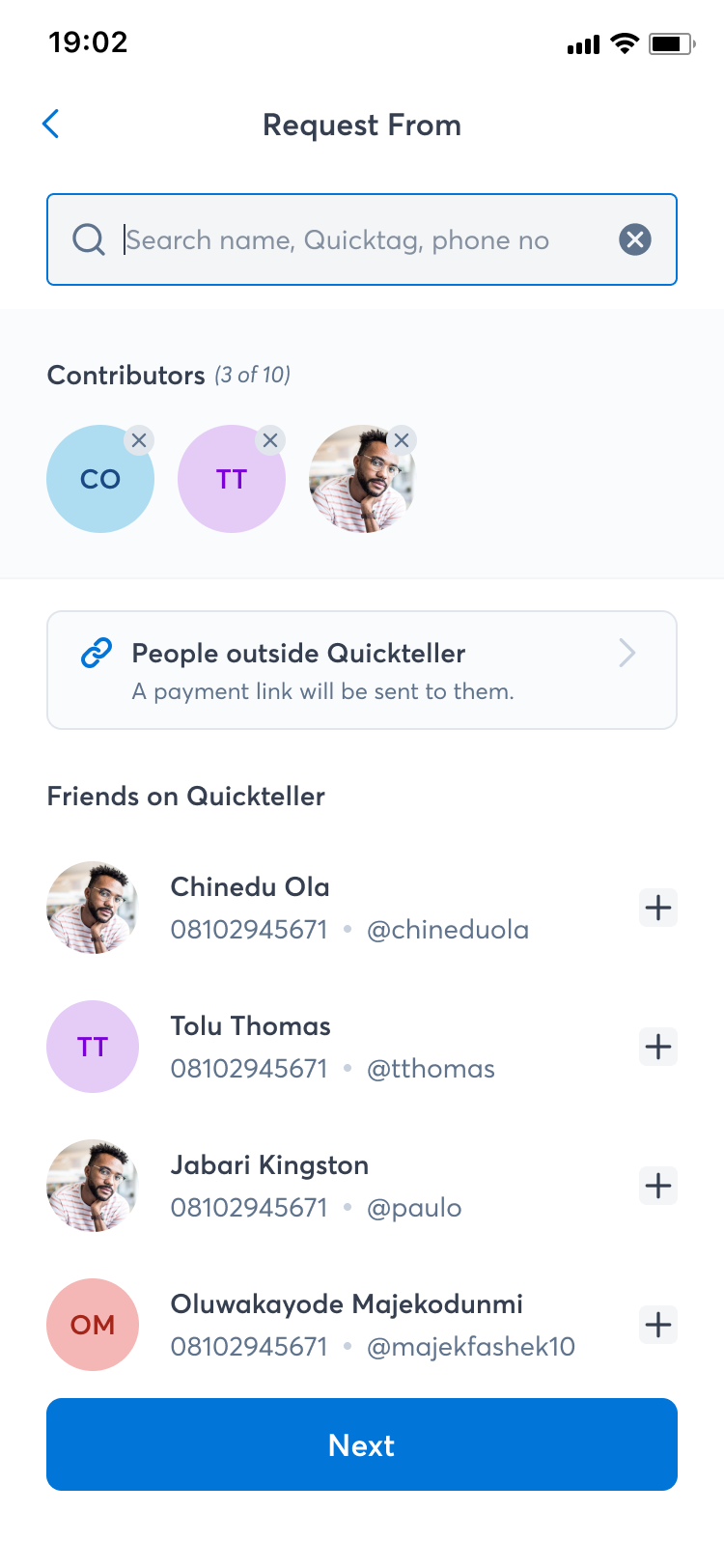 Scroll ↓
Split payments
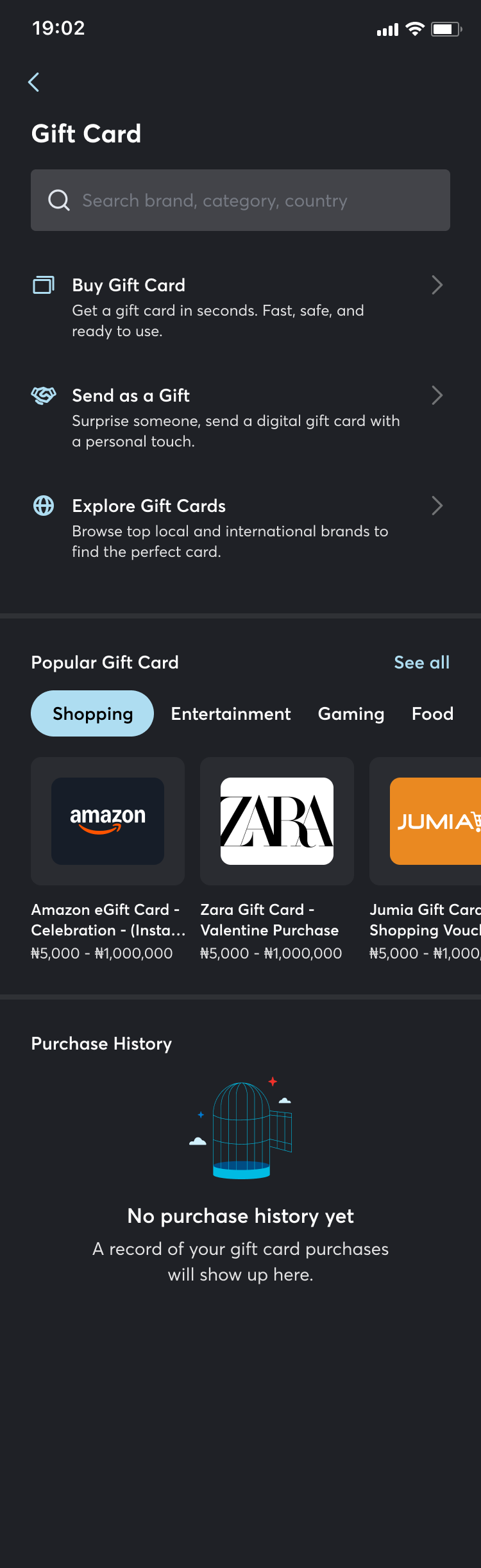 Scroll ↓
Gift cards
The ground up rebuild of one of Africa's most used payment platforms, evolving a fragmented bill payment product into a scalable financial superapp across mobile, web and USSD.
Scroll ↓Scroll ↓Scroll ↓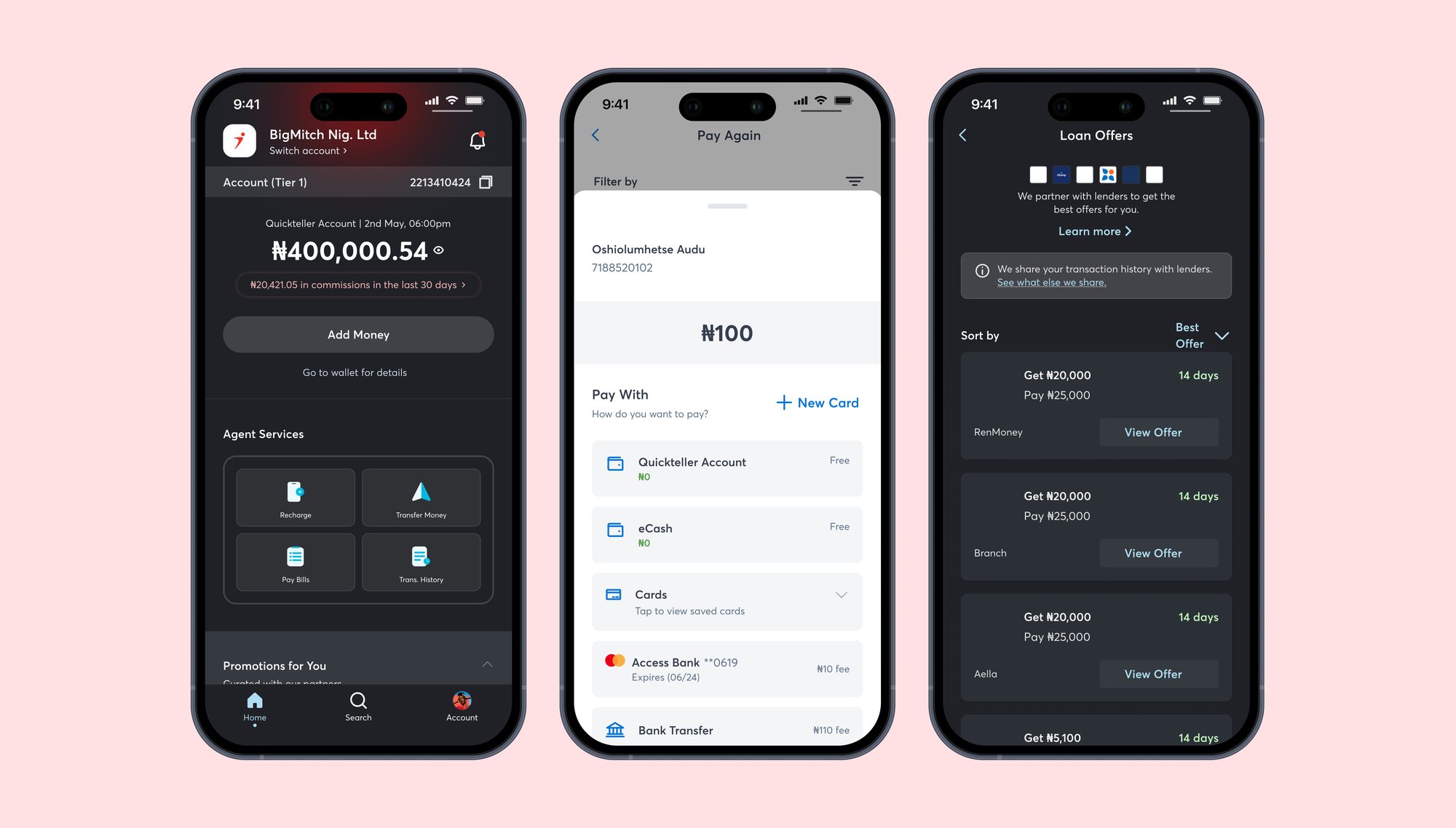
Quickteller started as a basic payment app and grew far beyond that within a decade. As it grew, design inflexibility and a weak underlying infrastructure made it hard to expand. Features shipped as separate products, some living only on web, others only on mobile, and the experience became disjointed.
The only real path forward was to rebuild Quickteller from the ground up. I joined the design team to help evolve it into a scalable superapp serving more than five million consumers and over three thousand active billers.
The real question was not how to redesign the screens. It was what shape the new Quickteller should take at all.
Years of organic growth had left products scattered across platforms with inconsistent patterns and no shared system. Before designing anything, the team had to decide whether to leave Quickteller's products separate, harmonise them, or reimagine the whole thing. We let research answer it.
Within a six person design team, partnering with Product, Engineering and Business, I owned eleven product modules from concept to production ready design, and collaborated across ten more.
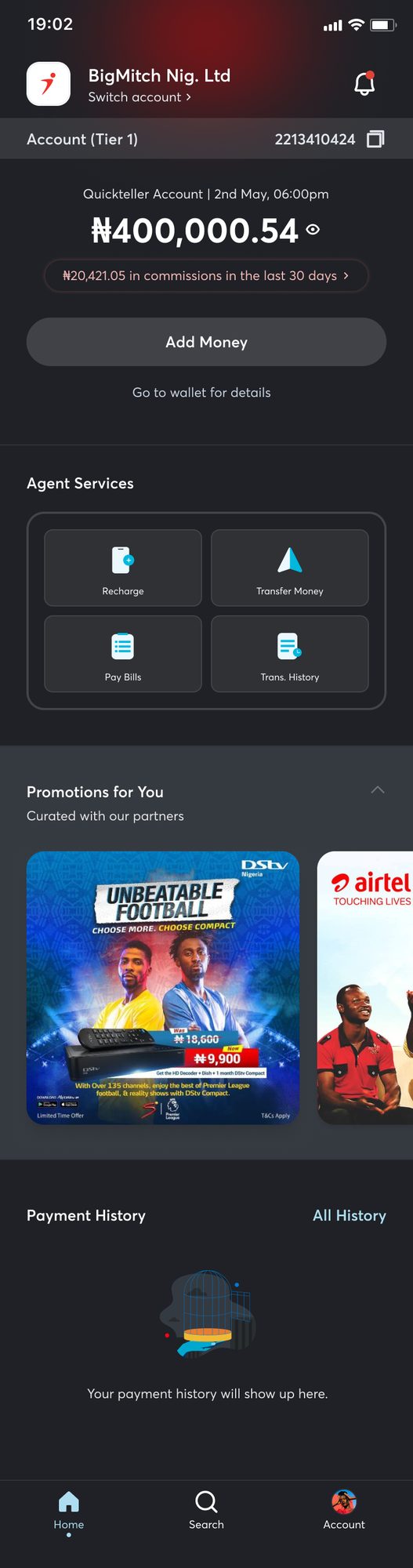 Scroll ↓
 Scroll ↓
Research ran in three phases: generative, design sprints, and evaluative. Generative work synthesised business goals and customer behaviour into three product concepts for the new Quickteller: a superapp, a hybrid app, and a family of apps.
Surveys alone came back inconclusive because people could not picture the concepts, so we built working models of each through design sprints and tested identical flows to keep results fair.
In evaluative testing with 30 participants over six days, the superapp won by a margin of 96.7%, with brand trust, ease of use and device storage the deciding factors.
With the direction validated, we committed to a superapp: a single, coherent ecosystem rather than a scatter of disconnected products. Every module that followed was designed to live inside that one experience, with a shared system underneath it. This is the thread the whole project turned on, evidence to insight to a decision that reshaped the product.
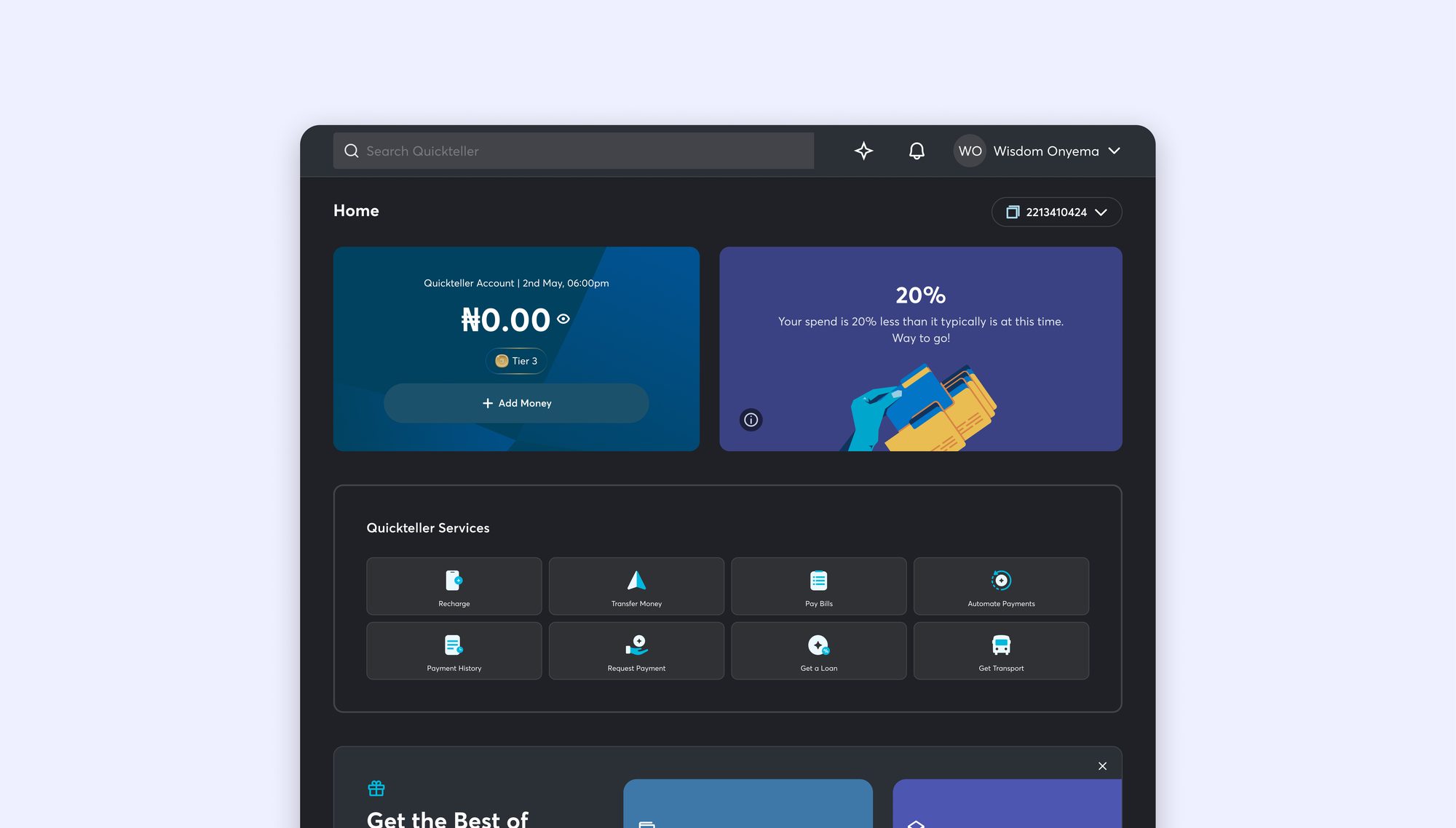
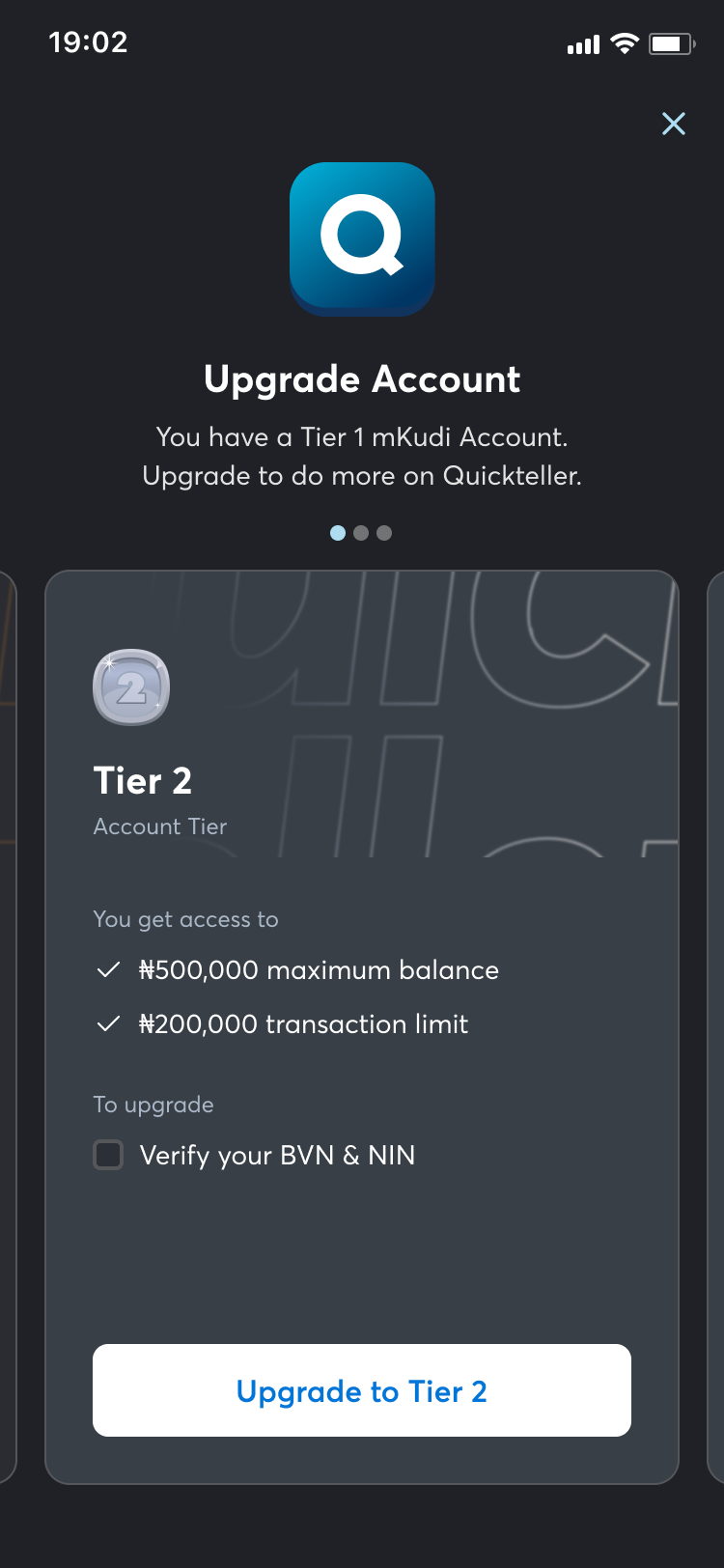
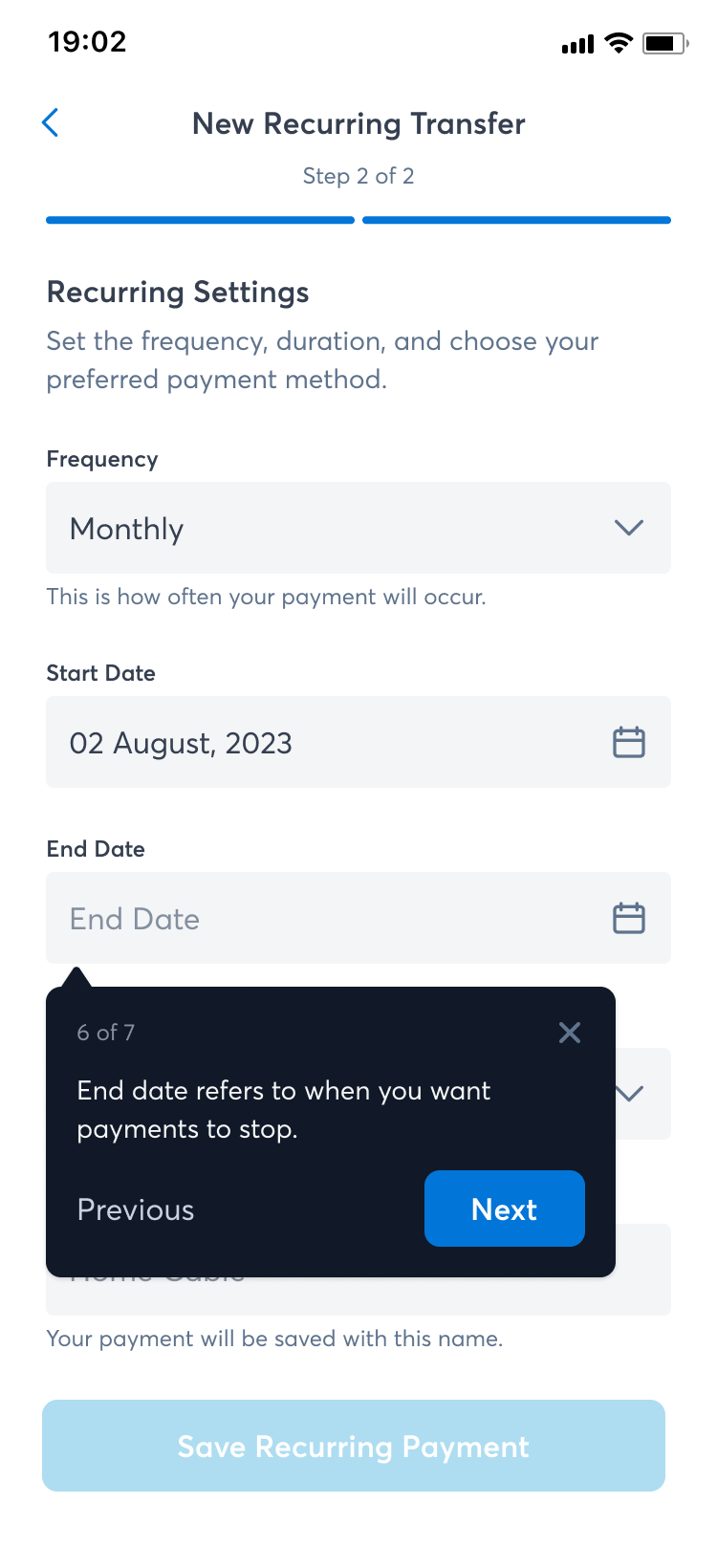
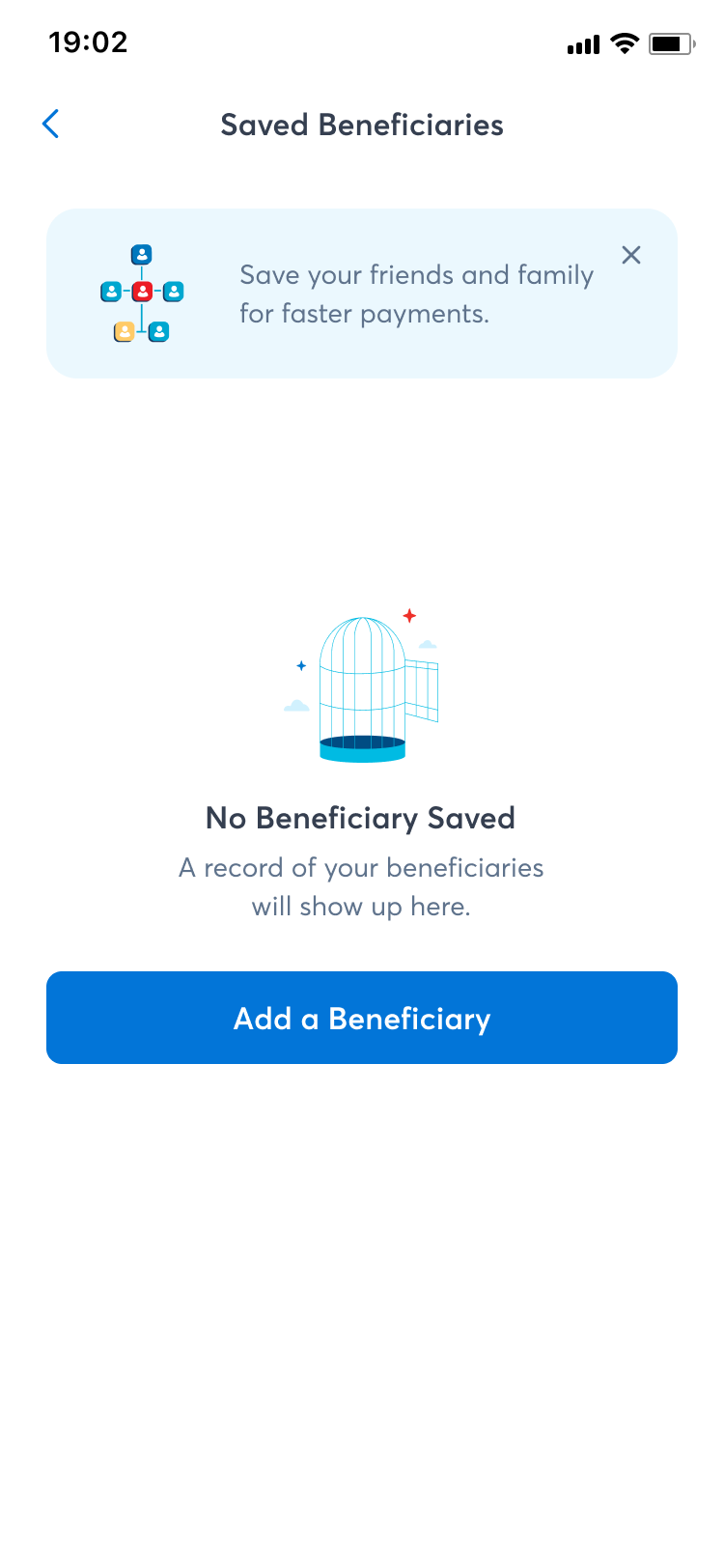
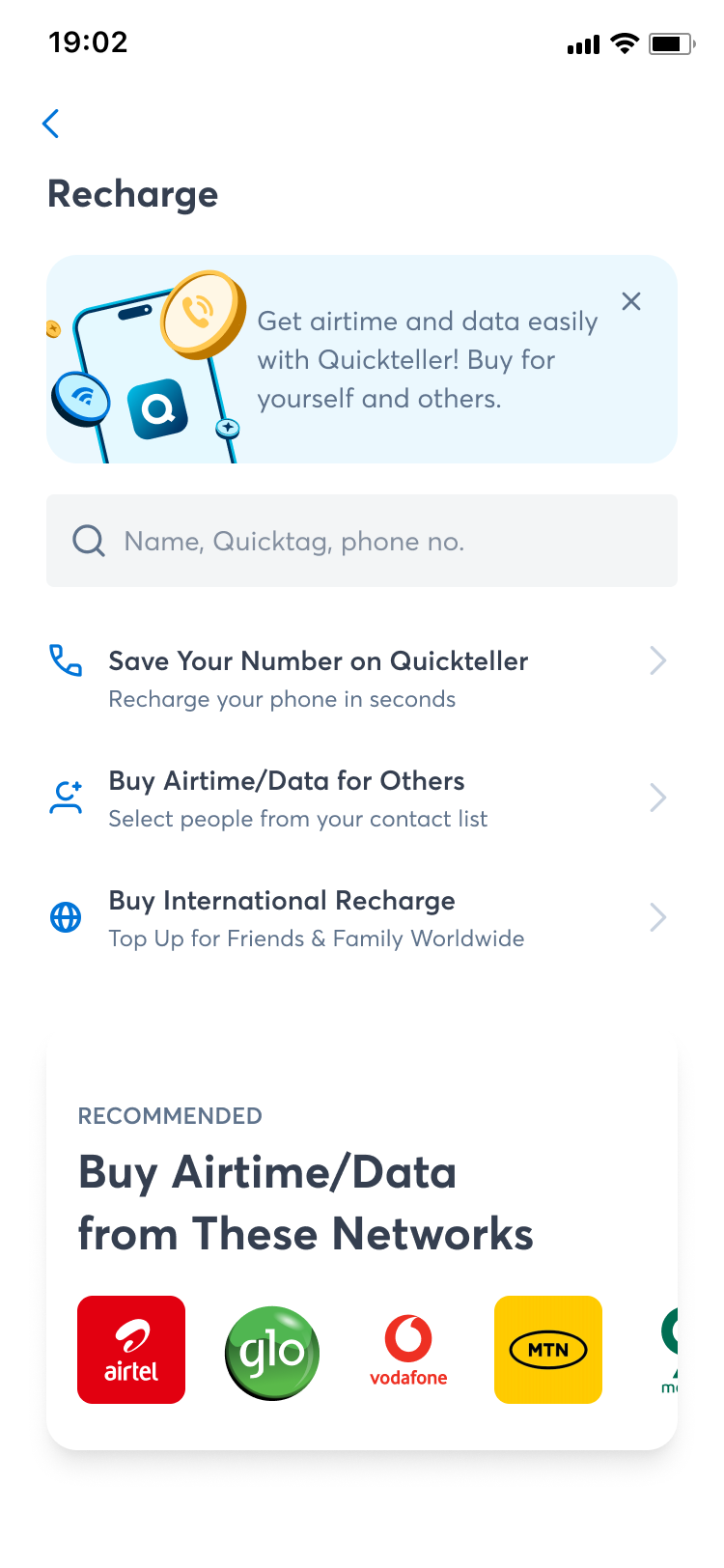
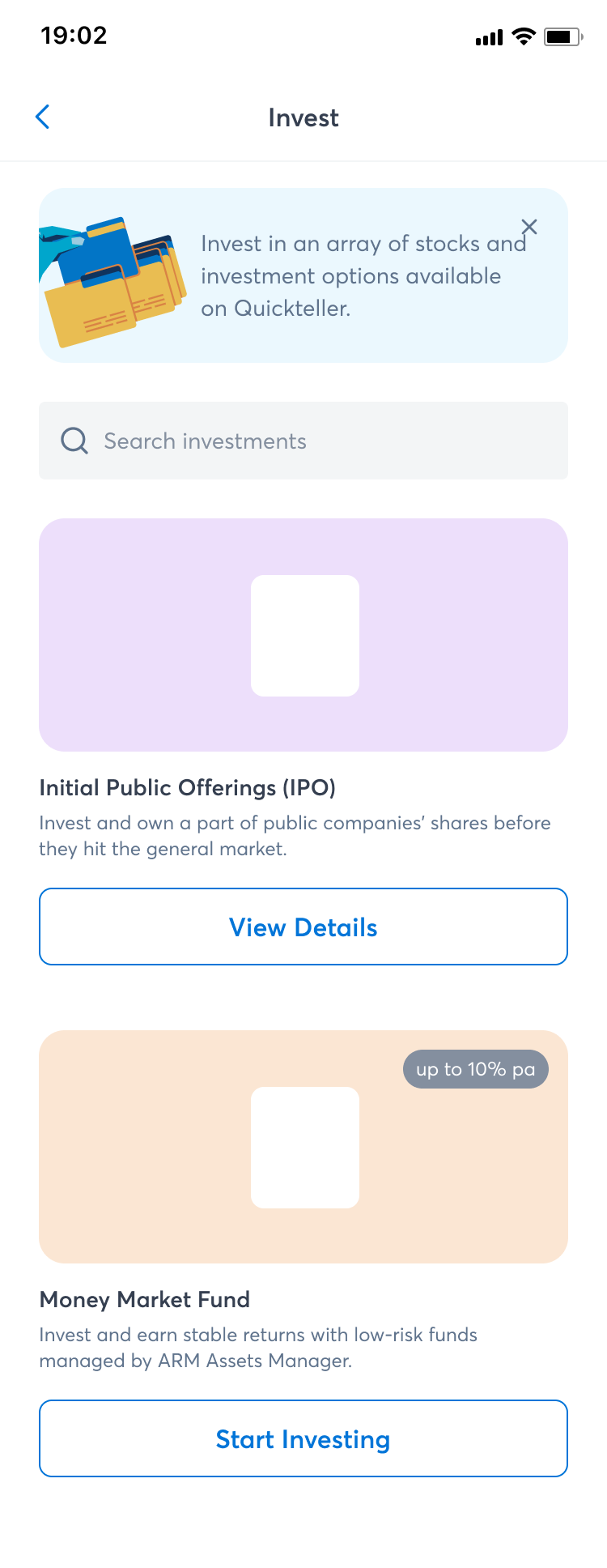
From identity and tiering to recurring and split payments, saved beneficiaries, gift cards, international airtime and money market funds, each module translated a complex financial workflow into a clear, guided experience.
 Scroll ↓
 Scroll ↓
 Scroll ↓
 Scroll ↓
 Scroll ↓
 Scroll ↓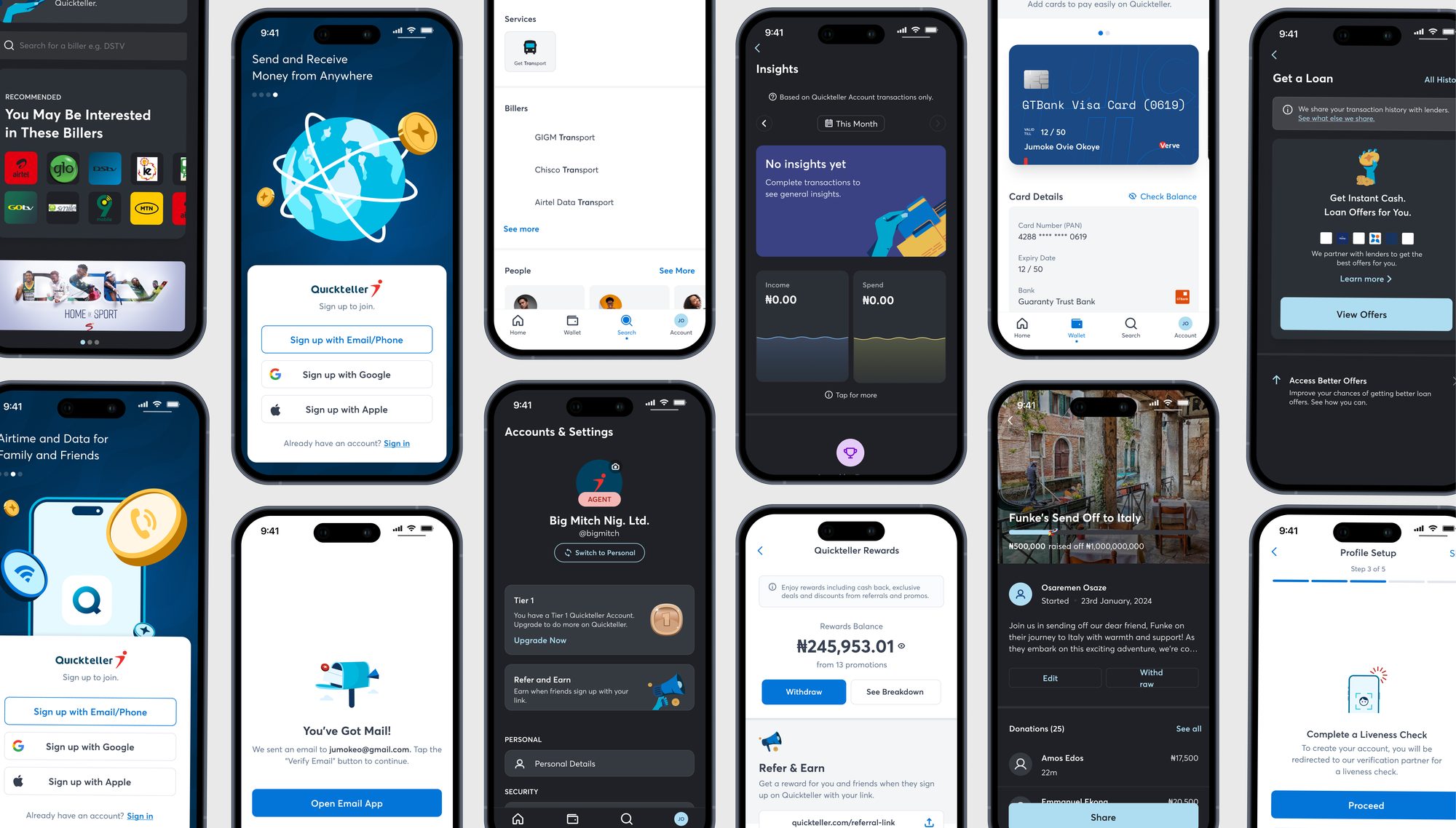
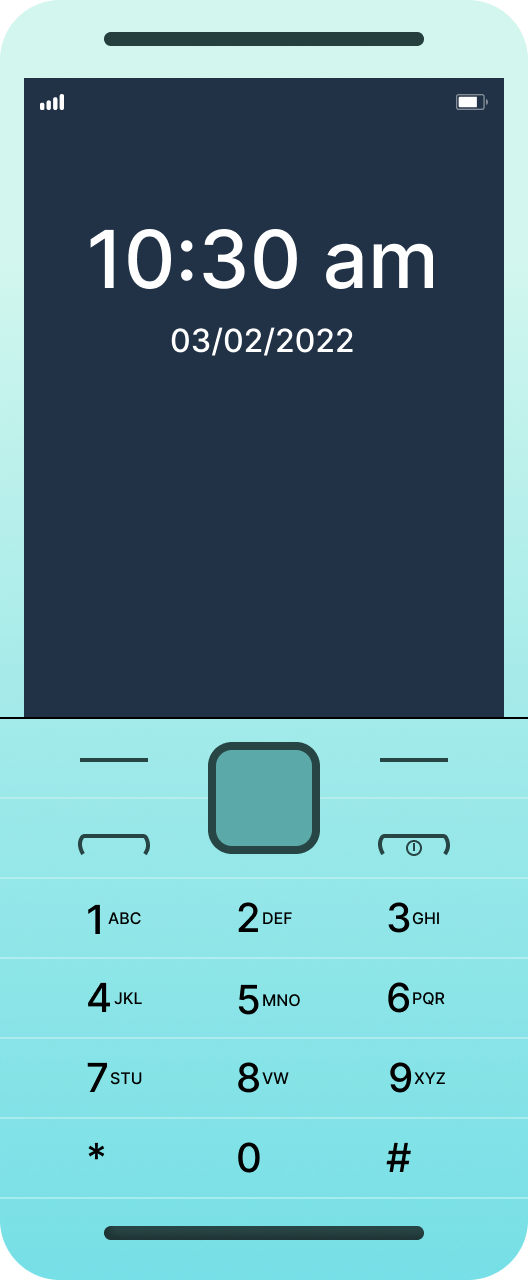
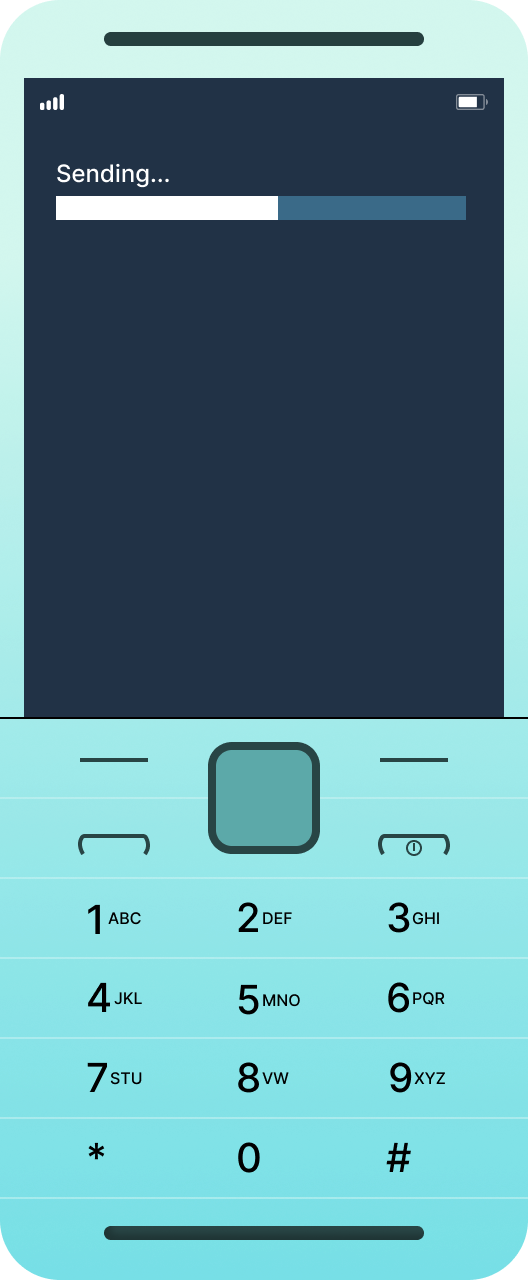
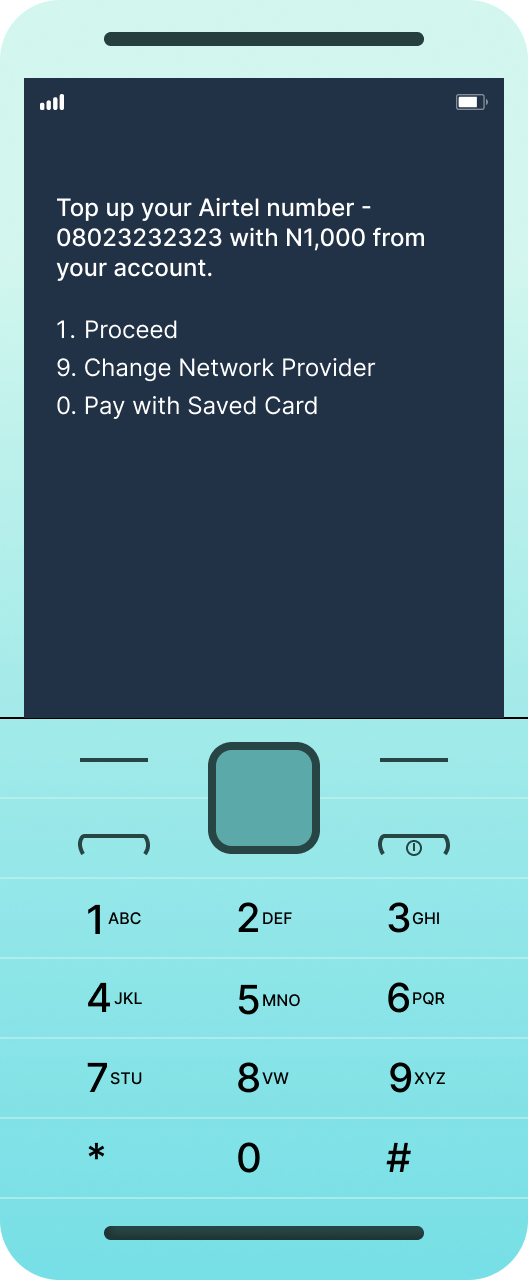
USSD has no graphics, no persistent state and no conventional navigation. Designing for it forced a trade of richness for accessibility. I capped navigation depth at three levels and stripped transactions down to their essential actions.
The interesting part: some of those constraints ended up simplifying the smartphone journeys too. Designing for the hardest surface made the richest one better.
 Scroll ↓
 Scroll ↓
 Scroll ↓
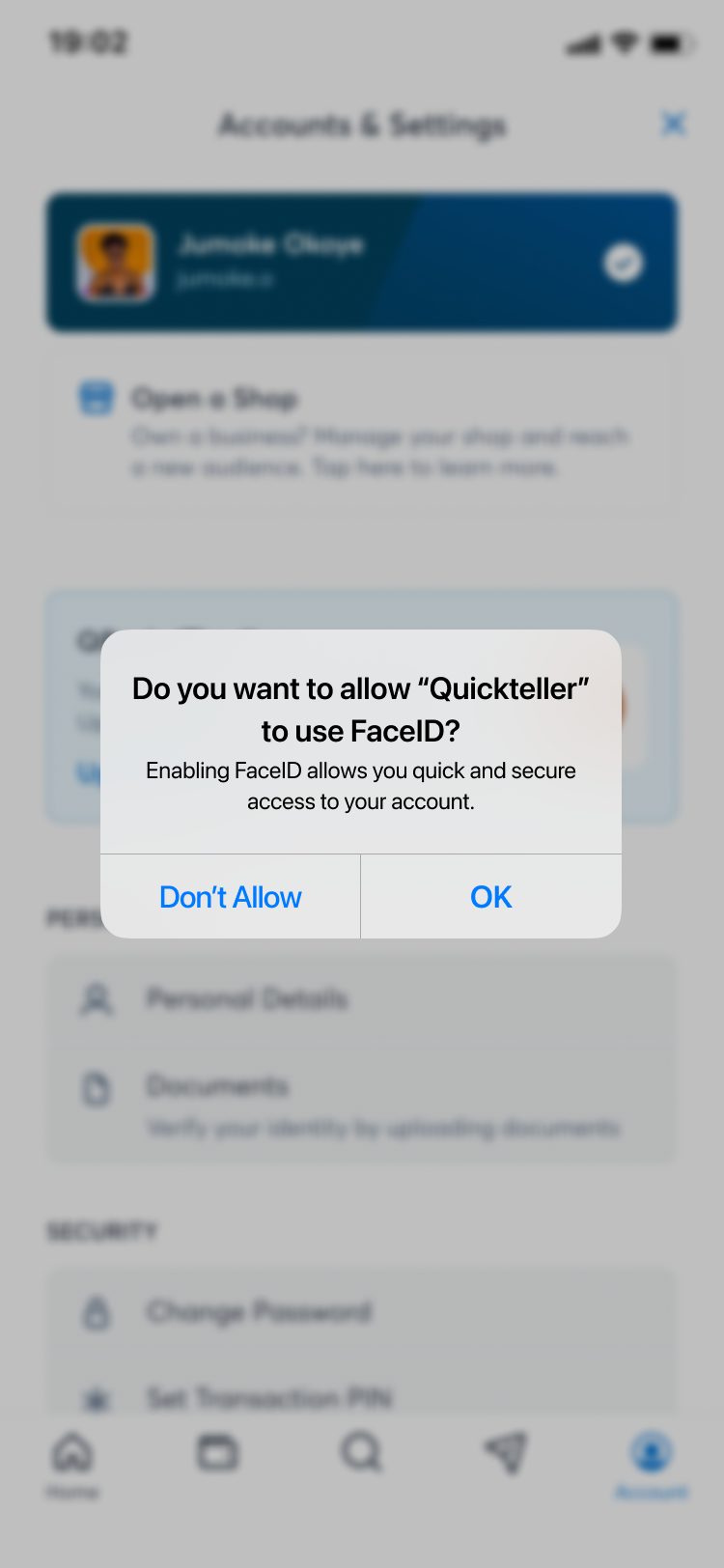
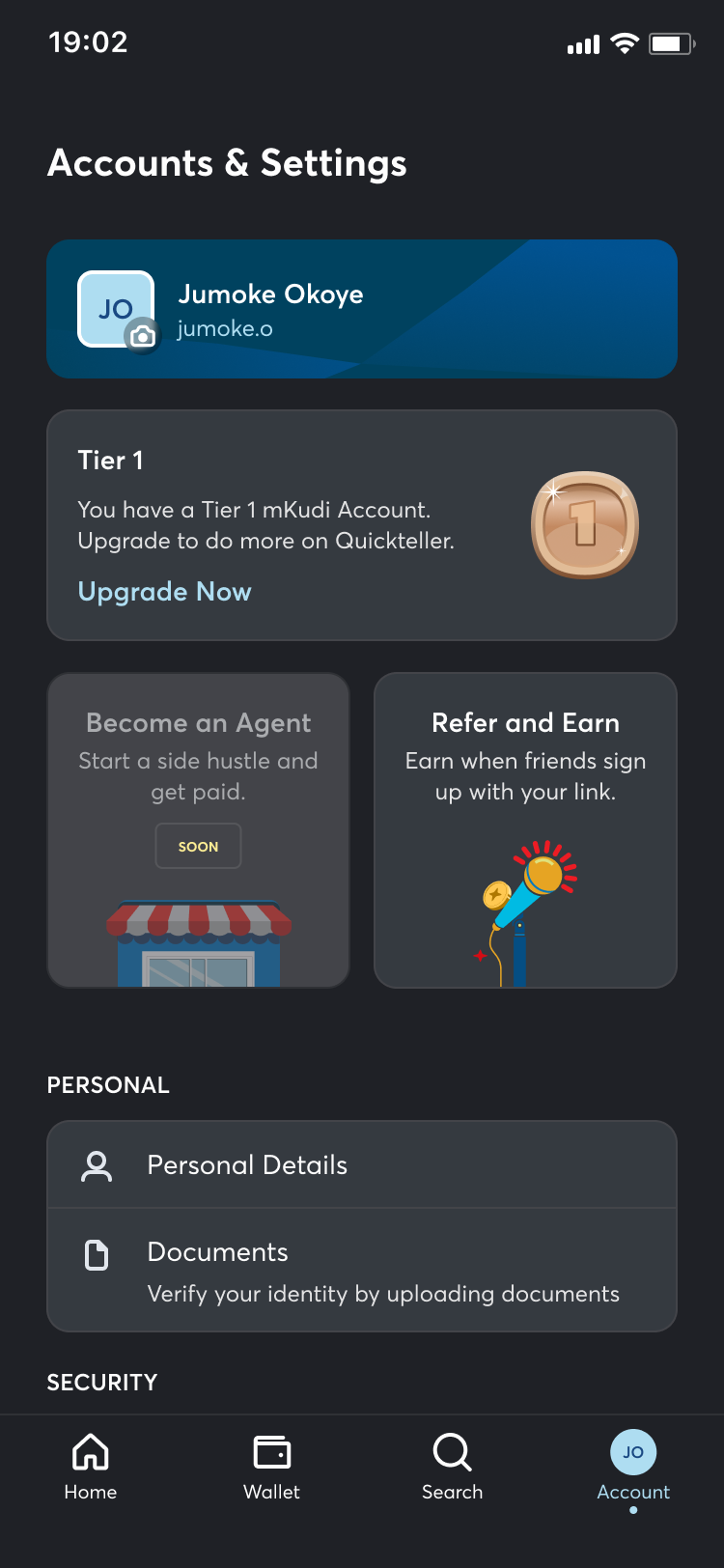
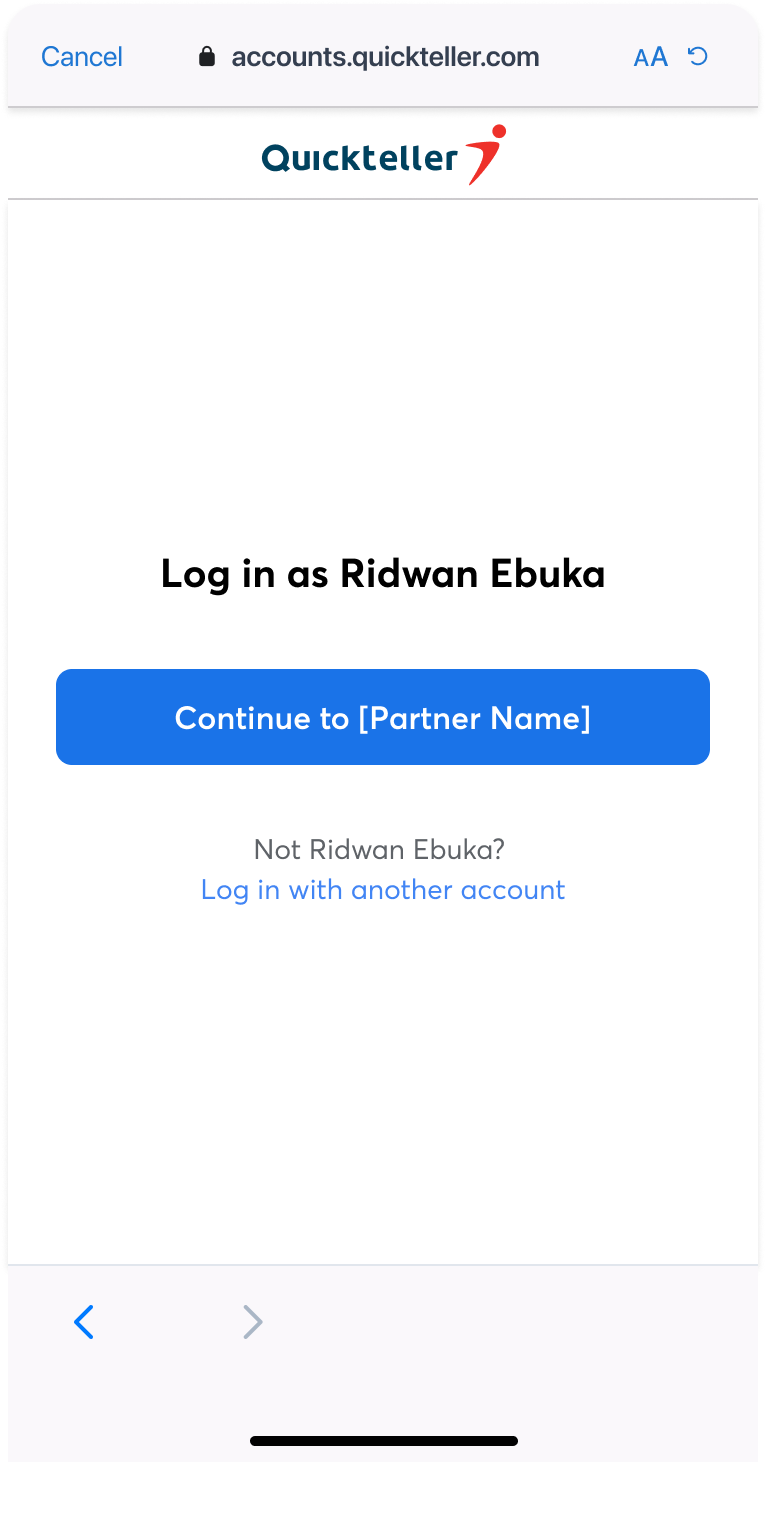
Across every module I extended SwitchCore, Interswitch's design system, with reusable components, variants and states that emerged from investment, recurring payment, KYC, beneficiary and transfer workflows. The system kept dozens of screens consistent and made each new module faster to ship than the last.
 Scroll ↓
 Scroll ↓
The rebuild reached closed beta as an integrated superapp, with the new product direction validated by 96.7% of research participants and eleven modules designed and built into the release. I moved on after the closed beta, so I could not track the long term metrics, but the foundation, the system, the modules and the validated superapp direction, was firmly in place.
The most valuable thing I took from Quickteller was the power of research to settle a question that opinion never could, and the discipline of designing for millions across surfaces as different as a superapp and a USSD string.
Working alongside six product managers on a rebuild at this scale taught me as much about managing stakeholders, and myself, as it did about design. It remains one of my most pivotal projects.